Anonymous eSIM vs VPN: Which Actually Protects Your Privacy?
A VPN protects your internet traffic, but it does not hide the SIM profile connecting your phone to a mobile network. This guide explains how an anonymous eSIM protects a different layer of privacy, what each tool can and cannot do, and why using both may offer stronger mobile security.
By GhostSims Team ·
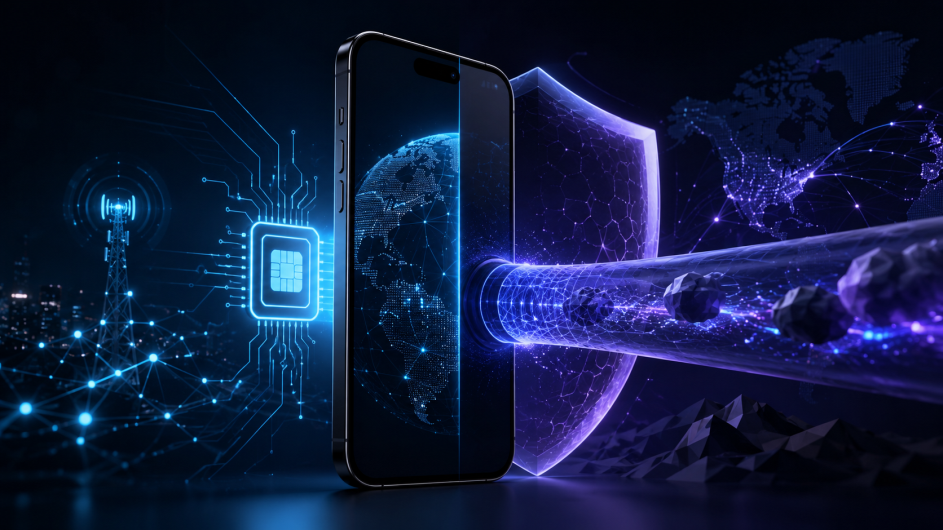
If you are a journalist, activist, security-conscious traveller, or privacy-aware phone user, you may already rely on a VPN to protect your internet activity. The problem is that your VPN only begins working after your phone has connected to a mobile network, leaving your subscriber identity, network access and cellular metadata outside the tunnel. GhostSims addresses that overlooked layer by offering privacy-focused SIM and eSIM options designed to reduce the amount of personal information attached to your mobile connection.
The simplest answer is this: a VPN protects what you do online, while an anonymous eSIM can reduce the link between who you are and the cellular service you use.
Neither tool makes a smartphone invisible. Used together, however, they address two different and equally important parts of mobile privacy.
Anonymous eSIM vs VPN: What Is the Main Difference?
A VPN and an eSIM are not competing versions of the same technology.
A virtual private network, or VPN, creates an encrypted tunnel between your device and a VPN server. Websites generally see the VPN server’s IP address instead of the public IP address assigned to your mobile connection.
An eSIM is a digital SIM profile that authenticates your device to a cellular network. A privacy-focused provider may offer it without requesting a passport, national identity document, home address, or conventional billing account.
An eSIM is not inherently private. The privacy difference comes from the provider’s registration, payment, logging and network practices, not from replacing a plastic SIM with a digital profile.
That creates a fundamental difference:
A VPN operates primarily at the internet traffic layer.
An eSIM operates at the cellular subscription and network-access layer.
Encrypted messaging apps protect the content of supported conversations.
Your phone’s operating system controls app permissions, device data and many location signals.
This is why asking whether a VPN is “better” than an eSIM is a little like asking whether a lock is better than a privacy curtain. They solve different problems.
What Does a VPN Protect on Your Phone?
A VPN encrypts IP traffic travelling between your phone and the VPN server. NIST defines a VPN as a virtual network built over existing networks that can provide a secure communication mechanism for transmitted data. When a properly configured VPN is active, your mobile provider can generally see the connection to the VPN server but not the browsing activity carried inside the encrypted tunnel.
When configured correctly, a reputable VPN can help protect:
Web traffic travelling over mobile data or public Wi-Fi
DNS requests, depending on the VPN configuration
Your public IP address from websites and online services
Unencrypted traffic from local Wi-Fi observers
Most browsing destinations from your mobile provider when all relevant traffic and DNS requests pass through a properly configured VPN tunnel
Internet access on untrusted hotel, airport or café networks
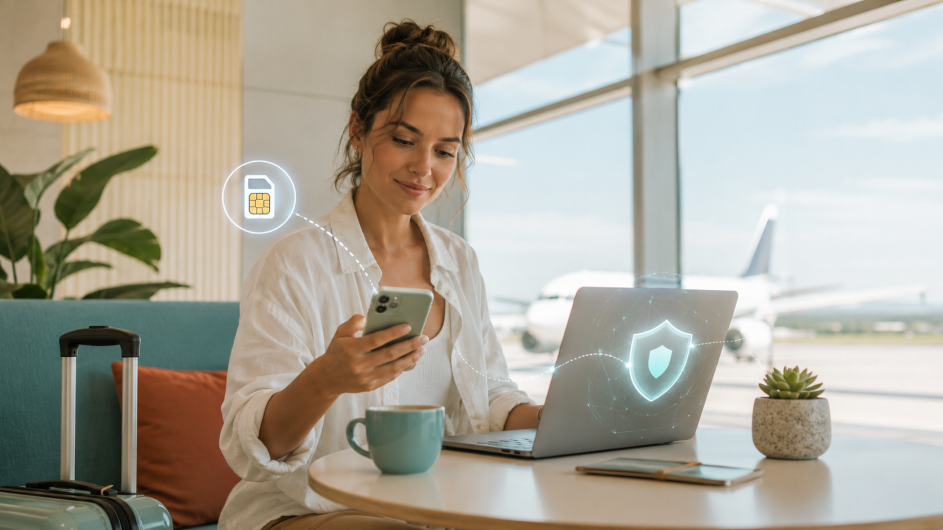
For example, imagine that you arrive at an airport in another country and connect to its public Wi-Fi. A VPN can encrypt traffic leaving your phone, reducing the risk that someone on the same network can observe or interfere with it.
That is useful protection. It is not cellular anonymity.
Does a VPN hide everything you do online?
No.
A VPN moves trust rather than eliminating it. Your mobile carrier may no longer see the precise destinations inside a properly configured encrypted tunnel, but the VPN provider can still see your originating IP address and may be able to observe connection metadata.
Your activity can also be identified elsewhere when you:
Log into Google, Facebook, Microsoft or another personal account
Accept tracking cookies
Use apps with persistent advertising identifiers
Share your precise location with an application
Allow browser or device fingerprinting
Use a VPN service that retains detailed logs
Experience a DNS, IPv6 or application-level traffic leak
A VPN should therefore be treated as one component of a privacy strategy, not an invisibility switch.
What Does a VPN Not Protect at the Cellular Layer?
Before a VPN can create its encrypted tunnel, your phone must obtain network access.
That process is handled through the SIM or eSIM profile, the device and the cellular operator. The network needs certain technical identifiers and connection information to authenticate the subscription, deliver service and route traffic.
A VPN does not normally hide or change:
The SIM subscription used to access the network
The IMSI or related subscriber identifier held by the home carrier
Your phone’s IMEI device identifier
The mobile network your device connects through
The cell sites serving your connection
The time and duration of network sessions
Traditional carrier voice calls or SMS messages
Cellular signalling outside the VPN tunnel
The International Mobile Subscriber Identity, or IMSI, identifies a cellular subscription. The IMSI, or its 5G equivalent within the SUPI, identifies a mobile subscription. In 5G networks, the permanent subscription identifier is normally concealed as a SUCI when transmitted during initial authentication. The home network must still recover and authenticate the underlying subscription.
Here’s the thing: your VPN application does not replace your mobile provider. It runs over the connection that provider has already given you.
Does a VPN protect cellular signalling?
No. A conventional VPN protects supported IP traffic between your device and the VPN server. It does not replace the signalling systems mobile networks use to authenticate subscriptions, route calls, deliver SMS messages or maintain connectivity.
A privacy-focused eSIM should not be presented as complete protection against every signalling or carrier-network threat either. Its protections depend on the provider’s architecture and the services included.
What Does an Anonymous eSIM Protect?
The main benefit is not that the eSIM becomes technically invisible. It is that the subscription may be acquired without attaching the same amount of verified personal information required by a conventional carrier account.
Depending on the provider, this can reduce links involving:
Your passport or national identity document
Your legal name
Your home address
Your personal email account
Your bank card or billing profile
Your primary domestic phone number
A long-standing account with your usual carrier
This distinction matters in countries where prepaid SIM registration requires formal identity verification. Instead of buying a local plan linked directly to your travel documents, you may be able to use a separately purchased international profile.
However, “no KYC” does not mean “no technical visibility.”
The serving mobile network can still determine that a device is connected, which cell area is providing service and when the connection occurs. Your device can also expose information through its IMEI, operating system, applications, accounts and behaviour.
A more accurate description is therefore:
A no-ID eSIM can reduce the direct connection between your legal identity and a mobile subscription, but it does not prevent every form of device, network or location analysis.
Is every no-KYC eSIM equally private?
No. Two providers can both avoid passport verification while offering very different privacy protections.
Before choosing a service, examine:
What information is collected during checkout
Whether an email address is compulsory
Which payment methods are accepted
Whether cryptocurrency payments are supported
How account recovery works
Whether traffic or connection logs are retained
Whether the service is data-only or includes voice and SMS
Which countries and networks are supported
Whether the service uses multiple or changeable IMSI profiles, how that process works, and what privacy benefit the provider can substantiate
How the provider explains its limitations
Silent Link, for example, publicly advertises no-KYC signup, cryptocurrency payments and roaming connectivity across numerous countries. Its FAQ also makes clear that the service still uses an IMSI and connects through local mobile networks.
That is an important sign of technically honest positioning: a privacy-oriented cellular service can reduce identity exposure without claiming that cellular connectivity leaves no network traces.
What Is an Encrypted eSIM?
An encrypted eSIM is a broader privacy product that may combine no-ID access with additional protections such as private routing, secure communications, account separation or rotating network identifiers.
The term is not a universal technical standard, so you should look beyond the label. Providers may use it to describe very different services.
Ask what is actually included:
Does the provider require identity verification?
Does it protect internet data automatically?
Are calls and messages encrypted, and under what conditions?
Does it provide IMSI rotation or merely claim “masking”?
Are voice and SMS standard carrier services or app-based services?
What metadata is retained?
Which parties must still process the connection?
GhostSims offers an encrypted SIM card and eSIM with no-ID purchasing options, global connectivity and privacy features intended to reduce the personal information associated with mobile use. Product features and compatibility should still be reviewed against your device, destination and threat model before purchase.
Can Your Carrier Track You When You Use a VPN?
Your carrier can still observe information required to provide the underlying connection.
With a properly working VPN, the carrier may see that your device is exchanging encrypted data with a VPN endpoint without seeing every website or online service inside that tunnel. It can still generally observe connection timing, data volume and cellular network activity.
It may also hold the customer information attached to your SIM account.
This is the privacy gap that many VPN users miss. Your browsing may be protected from routine carrier inspection, but your connectivity can remain associated with an account opened using your name, address, payment card and identity document.
A no-ID eSIM can reduce that account-level association. It does not erase the connection itself.
Can You Still Be Tracked With Both Tools?
Yes.
Using both can significantly improve compartmentalisation, but “tracked” can mean several different things.
Network-location visibility
A cellular network must know which general service area is handling your phone so it can deliver connectivity. A VPN does not remove this requirement.
Device identification
Your phone has hardware and software characteristics that may remain consistent when you change SIM profiles. Reusing the same device can allow activity to be correlated.
Account-based tracking
Signing into your normal Apple, Google, social media or email accounts can immediately reconnect an otherwise separated session to your identity.
Application location data
An app with GPS permission may reveal much more precise location information than a cellular connection alone.
Behavioural correlation
Repeated travel routes, contact patterns, login times, writing habits and frequently visited locations can make separate identities easier to associate.
Payment and purchase records
A bank card, personal email address or identifiable crypto transaction can create a link between you and the service.
The aim is therefore not to chase an unrealistic promise of total invisibility. It is to minimise unnecessary identity links and make casual profiling or cross-service correlation more difficult.
[IMAGE: Layered mobile privacy diagram showing device, eSIM, cellular network, VPN, apps and online accounts]
VPN vs Anonymous eSIM vs Both Together
Privacy question
VPN only
No-ID eSIM only
Both together
Hides your regular public IP from websites
Usually
Not necessarily
Usually
Encrypts internet traffic to a secure endpoint
Yes
Depends on provider
Yes
Allows service purchase without submitting a passport directly to the provider
No
Depending on provider
Depending on provider
Prevents the VPN provider from seeing your source IP
No
Not applicable
No
Stops your cellular connection appearing to networks
No
No
No
Protects standard carrier SMS
No
Not automatically
No
Protects standard carrier voice calls
No
Not automatically
No
Reduces links to your domestic carrier account
No
Yes, when used separately
Yes
Prevents app and account tracking
No
No
No
Reduces exposure on public Wi-Fi
Yes
Not by itself
Yes
Provides the broadest practical coverage
Limited to internet traffic
Limited to cellular identity separation
Yes
A stronger mobile privacy setup may combine :
A cellular profile purchased with minimal personal information
A trustworthy VPN
End-to-end encrypted communication apps
Carefully controlled app permissions
Separate accounts where appropriate
A device configured for your actual risk level
Who Needs an Anonymous eSIM on Top of a VPN?
Not every phone user needs the same level of separation.
Journalists protecting sources
A journalist working across borders may want to avoid registering a local SIM with a passport while also protecting research traffic through a VPN. Secure messaging is still needed for source conversations.
Activists and human-rights workers
People operating in sensitive environments may need stronger separation between their legal identity, local connectivity and online activity. The exact setup should be based on professional security advice and local law.
Security-conscious travellers
A traveller may not want to hand identity documents to multiple mobile shops or attach every trip to a domestic roaming account. A global eSIM combined with a VPN can reduce unnecessary account exposure.
Executives handling confidential work
Executives often use hotel Wi-Fi, airport networks and international roaming while accessing sensitive company systems. Layered protection can reduce both internet and subscription-level exposure.
Privacy-aware everyday users
You do not need to be in a high-risk profession to prefer data minimisation. A separate eSIM can help compartmentalise travel, research, online purchases or temporary communications from your primary number.
How to Use an Anonymous eSIM and VPN Together
1. Define what you are protecting
Decide whether your main concern is public Wi-Fi, carrier registration, browsing privacy, location exposure, account separation or sensitive communication.
2. Check the provider’s data requirements
Confirm whether the service asks for identification, an email address, billing details or a permanent account.
3. Review payment privacy
Crypto can reduce reliance on conventional payment accounts, but it is not automatically untraceable. Transaction history, exchange records and wallet reuse can create links.
4. Install the eSIM securely
Avoid sharing QR codes or activation details. Delete screenshots and unsecured copies once you no longer need them.
5. Enable the VPN before sensitive browsing
Use an always-on setting or kill switch when available so traffic does not silently fall back to the unprotected connection.
6. Control app permissions
Disable unnecessary access to precise location, contacts, Bluetooth, local networks, advertising identifiers and background activity.
7. Avoid identity crossover
Do not expect separation to survive if you immediately log into the same personal accounts, use your primary phone number or sync your usual cloud profile.
8. Use secure communication tools
For sensitive conversations, use a reputable end-to-end encrypted service rather than relying on standard SMS or ordinary carrier calls.
Frequently Asked Questions
Does a VPN hide your SIM card?
No. A VPN encrypts supported internet traffic after your phone connects to the network. It does not hide the SIM or eSIM profile from the cellular infrastructure needed to authenticate and serve it.
Is a VPN better than an eSIM?
Neither is universally better because they perform different functions. A VPN protects internet traffic, while a privacy-focused eSIM can reduce the personal information attached to cellular access.
Can mobile carriers track you even with a VPN?
A carrier can still observe the information required to provide mobile service, including connection timing, data volume and the network areas serving the device. A working VPN can prevent the carrier from directly seeing much of the traffic inside the encrypted tunnel.
What does an anonymous eSIM do that a VPN cannot?
It may let you obtain cellular service without submitting the identity documents or billing information commonly required by traditional carriers. A VPN cannot change who owns the underlying mobile account.
Do VPNs actually keep you anonymous?
Not completely. A VPN can hide your normal public IP and encrypt traffic to its server, but websites, apps, logged-in accounts, device fingerprints and the VPN provider may still identify or correlate you.
Is an eSIM more private than a physical SIM?
The format alone does not determine privacy. A standard eSIM registered in your name can be just as closely associated with you as a physical SIM. The provider’s registration, logging and network practices matter more.
Can an eSIM be anonymous?
It can be purchased without conventional identity verification when the provider and applicable rules allow it. The device and connection will still produce technical network data, so the term should not be interpreted as complete invisibility.
Does IMSI rotation make you untraceable?
No. Rotation can make long-term correlation using one static subscriber identifier more difficult, but it does not eliminate device identifiers, network location, app tracking, account logins or behavioural patterns.
The Privacy Verdict
A VPN is essential when you want to encrypt internet traffic and limit what a local network or mobile provider can see about your browsing. It does not change the subscriber account that gave your phone cellular access.
A privacy-focused eSIM tackles that separate problem by reducing the personal identity information attached to the subscription. It does not hide every network event or replace secure apps, careful device configuration and sensible operational habits.
For most privacy-conscious users, the real answer is not eSIM or VPN. It is a layered setup in which each tool protects the part of the mobile connection it was designed to handle.
GhostSims provides encrypted SIM and eSIM options for users who want to strengthen the cellular foundation of that setup without relying only on software-based privacy tools.
Order Your Ghost SIM Online or Contact us on Whatsapp +44 7375 695524