Can You Receive OTP on eSIM? Everything You Need to Know
Wondering if you can receive OTP on eSIM? The answer depends on the type of eSIM you use. This guide explains how SMS verification works with eSIMs, why some travel eSIMs fail to receive OTPs, and how to stay connected securely while protecting your privacy
By GhostSims Team ·
If you travel frequently, use dual SIM phones, value privacy, or recently switched to an eSIM-only device, you’ve probably wondered whether OTPs (One-Time Passwords) still work properly on eSIM. Missing a banking code, login verification text, or authentication message while abroad can lock you out of critical accounts at the worst possible moment. Ghost Sim helps users maintain secure, private mobile communication while avoiding the common problems tied to unreliable SIM setups, roaming restrictions, and exposed personal numbers.
GhostSims eSIMs are for private outgoing calls and encrypted data; they do not receive SMS or OTP codes. For anonymous numbers that can receive verification codes, use anonsms.io, GhostSims' sister service.
Here’s the short answer:
Yes, you can receive OTPs on an eSIM - but only if the eSIM supports SMS and is configured correctly.
That’s where many people get confused. Not all eSIMs work the same way. Some are data-only travel eSIMs, while others function exactly like a normal mobile SIM with calling and SMS support.
How OTP Verification Works on eSIM
An OTP is usually sent through:
SMS text message
Voice call
Authentication app
Email verification
When a service sends an SMS OTP, it simply targets your phone number. It does not care whether the number is attached to:
A physical SIM
An eSIM
A dual SIM setup
If your eSIM has:
An active mobile number
SMS capability
Network connectivity
…then OTPs typically work exactly like they do on a physical SIM card.
Why Some People Fail to Receive OTPs on eSIM
This is where frustration starts.
A lot of users buy a cheap travel eSIM expecting everything to function normally - only to discover they cannot receive banking codes, WhatsApp verifications, or login texts.
The biggest reason?
Many eSIMs Are Data-Only
A large percentage of travel eSIM providers only offer mobile data. They do not provide:
SMS support
Voice calling
Traditional phone numbers
Without an assigned phone number capable of receiving SMS, OTP messages cannot arrive.
This is one of the most common complaints from international travelers landing in places like Dubai, London, Bangkok, or New York after switching to a budget eSIM.
Can Data-Only eSIMs Receive OTP Codes?
No - not traditional SMS OTPs.
A data-only eSIM can provide:
Internet access
Messaging app connectivity
VoIP functionality
But it cannot directly receive:
SMS verification texts
Carrier-based authentication messages
Standard banking OTPs
That’s why many travelers keep their primary SIM active while using a separate eSIM for mobile data.
Dual SIM Setup: The Most Reliable Solution
Modern phones allow you to run:
One physical SIM + one eSIM
Two eSIMs simultaneously
Multiple stored eSIM profiles
This setup is often the safest option.
Example Scenario
You travel from the UK to Thailand.
You use:
Your home SIM for OTP verification
A local eSIM for affordable mobile data
Your bank still sends OTPs to your original number, while the travel eSIM handles internet access.
This avoids expensive roaming while preserving account access.
How to Receive OTP on eSIM While Traveling
Here’s what experienced travelers usually do.
1. Keep Your Primary Number Active
Do not disable your main SIM or primary eSIM if you rely on it for:
Banking
Crypto exchanges
WhatsApp
Email verification
Social media logins
2. Enable Wi-Fi Calling
Wi-Fi Calling can route texts and calls over mobile data or Wi-Fi.
This becomes incredibly useful abroad when roaming coverage is weak.
Most major carriers now support it, including:
Verizon
T-Mobile
AT&T
EE
Vodafone
3. Configure Default SMS Line Correctly
On iPhone and Android devices, you can choose which SIM handles:
Calls
Data
SMS messaging
If configured incorrectly, OTP texts may fail to appear.
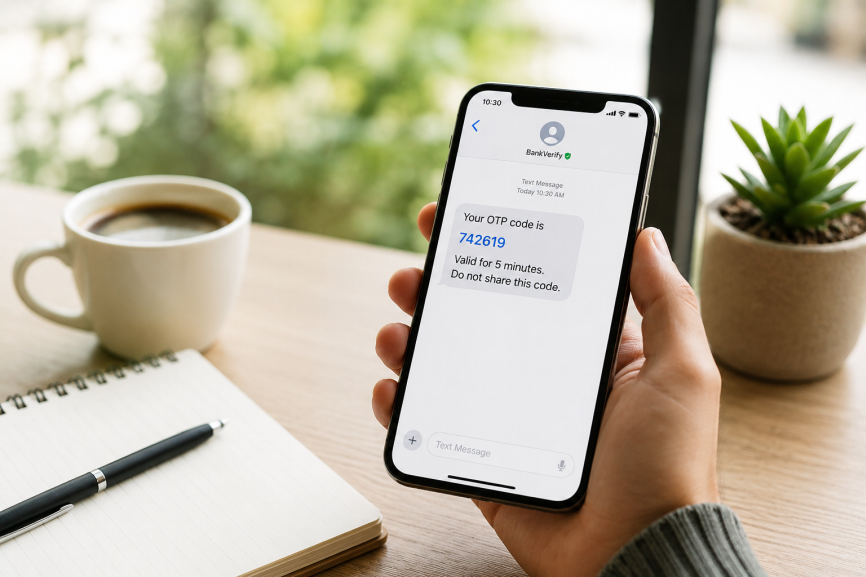
Can iPhone eSIM Receive OTP?
Yes.
iPhones with eSIM support can receive OTPs normally if:
The eSIM has SMS capability
The carrier supports text messaging
Network connection is active
This applies to:
iPhone 14
iPhone 15
iPhone 16
Most modern iPhones supporting eSIM
In the United States, newer iPhones are now eSIM-only devices, meaning physical SIM trays are disappearing entirely.
Can Android eSIM Receive Verification Codes?
Absolutely.
Google Pixel, Samsung Galaxy, and many modern Android devices support eSIM OTP delivery.
Again, the key factor is whether the eSIM includes:
A real mobile number
SMS functionality
Not all prepaid eSIM providers offer this.
Common OTP Problems With eSIM
OTP Delayed or Never Arrives
Possible causes:
Roaming restrictions
SMS filtering
Weak carrier registration
Incorrect APN settings
Disabled SMS roaming
Bank blocking foreign numbers
OTP Works on Wi-Fi But Not Cellular
Usually linked to:
Carrier registration issues
VoLTE problems
Disabled Wi-Fi Calling
Verification Fails on Travel eSIM
Often caused by using:
Data-only eSIMs
Temporary virtual numbers
Unsupported carriers
If maintaining privacy during account verification is important to you, these best ways to verify accounts without your real number cover safer methods that reduce exposure while keeping access reliable.
Why Privacy-Conscious Users Prefer Secure SIM Solutions
Here’s the thing…
Many people searching about eSIM OTPs are also trying to protect their identity online. They want:
More privacy
Fewer data leaks
Reduced tracking
Secure communication
Traditional carriers often log:
Call history
SMS metadata
Location activity
Device information
That’s one reason secure SIM providers like Ghost Sim are gaining attention among journalists, executives, travelers, and privacy-focused users.
Ghost Sim combines:
Encrypted communication
Anonymous mobile usage
Secure calling
Privacy-first connectivity
…while helping users maintain reliable access to critical communication services.
If protecting your mobile identity matters, a secure SIM setup becomes much more important than simply finding the cheapest eSIM online.
If protecting your personal information is a priority, these secure ways to receive verification codes privately can help you reduce exposure while maintaining reliable access to important accounts.
If you are deciding between disposable verification services and long-term private mobile solutions, this comparison of temporary phone numbers vs anonymous SIM cards breaks down which option actually works in real-world situations.
Can You Receive OTP Without a SIM Card?
Usually no.
Most OTP systems rely on a real mobile number connected to a carrier network.
Many users turn to public verification platforms as a quick fix, but this breakdown of why most free SMS receive sites fail explains the security risks, delivery issues, and privacy concerns behind those services.
Alternative methods include:
Authentication apps
Email verification
Hardware security keys
But many banks and platforms still require SMS verification.
If you’re exploring secure alternatives, this guide on how to receive SMS OTP without using your real number explains safer methods without exposing your primary identity.
If you want extra privacy while still accessing verification codes safely, this guide on how to receive SMS OTP without using your real number explains several secure alternatives worth considering.
eSIM vs Physical SIM for OTP Verification
Feature
eSIM
Physical SIM
Receive SMS OTP
Yes (if SMS-enabled)
Yes
Travel Friendly
Excellent
Moderate
Easy Carrier Switching
Yes
No
Privacy Potential
Higher with secure providers
Lower
Risk of Physical Theft
Lower
Higher
Setup Complexity
Slightly higher
Easier
Best Practices for Receiving OTP on eSIM
Before Traveling
Enable Wi-Fi Calling
Test OTP delivery
Verify roaming settings
Save backup authentication methods
While Abroad
Keep your main SIM active
Use dual SIM mode
Avoid disabling SMS functionality
Maintain internet connectivity
For Privacy
Avoid public SMS receiver sites
Avoid temporary free numbers
Use secure carriers when possible
For users who rely heavily on private verification and secure account access, these best SIM cards for anonymous OTP verification offer more reliable and privacy-focused alternatives than standard mobile carriers.
Are eSIM OTPs Secure?
Generally yes - but security depends more on the carrier and user habits than the eSIM technology itself.
Potential risks include:
SIM swap attacks
SMS interception
Malware
Phishing attempts
Security experts increasingly recommend combining:
eSIM usage
Encrypted communication
App-based authentication
Secure mobile providers
Frequently Asked Questions
Does eSIM receive OTP?
Yes, eSIMs can receive OTPs if they support SMS messaging and have an active phone number.
Can eSIMs receive verification codes?
Yes. Verification codes sent through SMS work on compatible eSIM plans.
Can I receive SMS on my eSIM?
You can if your eSIM includes SMS and voice functionality. Data-only eSIMs usually cannot receive texts.
Why am I not getting OTP on my eSIM?
Common reasons include:
Data-only eSIM plan
Roaming disabled
Incorrect SIM settings
Carrier restrictions
Can travel eSIMs receive OTP?
Usually no, unless the travel eSIM includes a real phone number with SMS support.
Final Thoughts
Yes, receiving OTP on eSIM is completely possible - but the type of eSIM matters far more than most people realize.
A proper SMS-enabled eSIM behaves almost exactly like a traditional SIM card. The problems typically happen with cheap data-only travel eSIMs that lack SMS capability.
For users who care about both accessibility and privacy, secure mobile solutions matter even more. Ghost Sim helps bridge that gap by offering encrypted, privacy-focused communication designed for people who do not want to compromise security just to stay connected.
Order Your Ghost SIM Online or Contact us on Whatsapp +44 7375 695524