Why Most Free SMS Receive Sites Fail (And What Actually Works Instead)
Free SMS receive sites often fail because shared virtual numbers get blocked, overloaded, or filtered by carriers. This article explains the biggest reliability and privacy risks behind temporary SMS platforms and explores why secure SIM-based alternatives offer better protection for anonymous communication and account verification.
By GhostSims Team ·
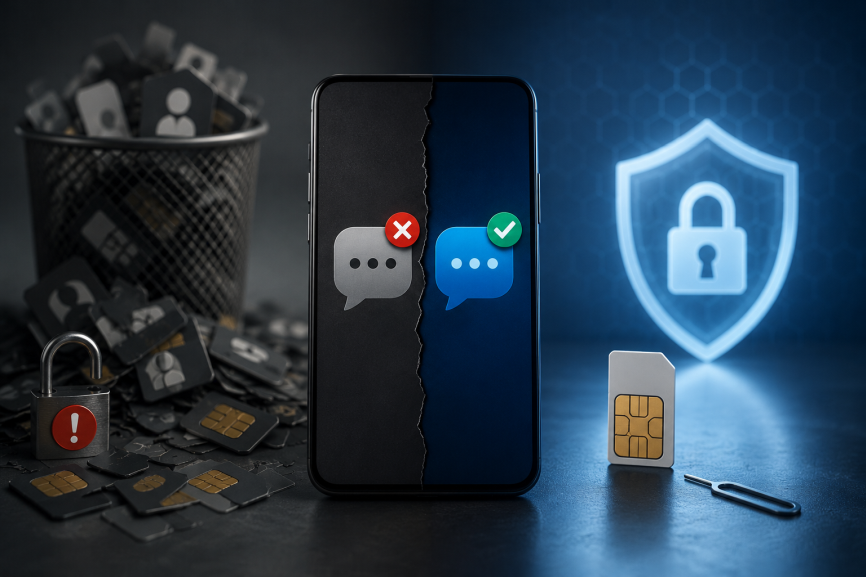
If you’re someone trying to protect your privacy online, avoid spam, or create accounts without exposing your real phone number, free SMS receive sites probably seemed like an easy solution at first. The problem? Most users quickly run into blocked verification codes, missing messages, overloaded systems, or worse - complete privacy exposure. Ghost Sim helps solve these problems by offering encrypted, private SIM technology built for reliable and anonymous communication without relying on public virtual numbers that constantly fail.
The Appeal of Free SMS Receive Sites
At first glance, these platforms sound convenient.
You visit a website, pick a temporary phone number, and receive a verification code for free. No contract. No signup. No SIM card needed.
That’s exactly why millions of people use them for:
Social media account verification
Dating apps
Marketplace registrations
Temporary online accounts
Avoiding spam texts
Anonymous browsing
Here’s the issue though: convenience usually comes at the cost of reliability and privacy.
And most people don’t realize that until they’re locked out of an account or their verification code never arrives.
Why Free SMS Receive Sites Fail So Often
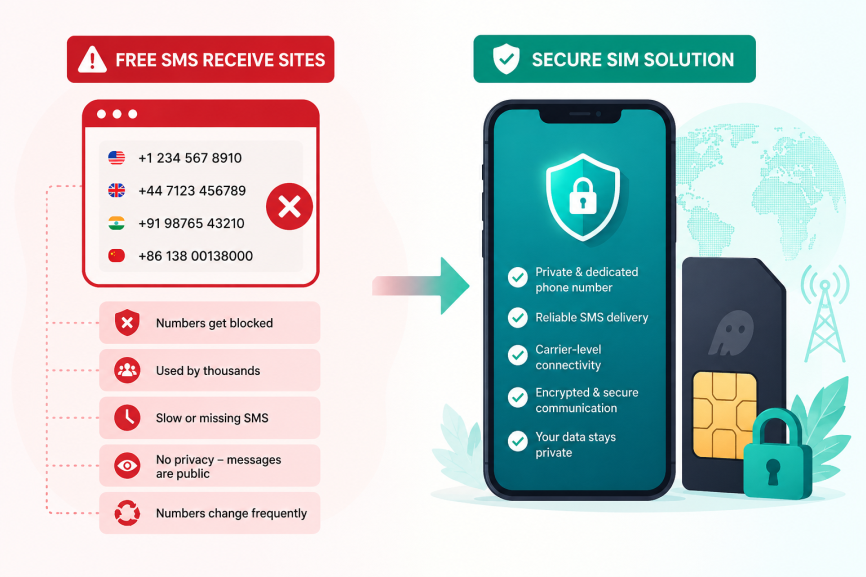
Public Numbers Get Blocked Constantly
Most free SMS receive platforms use publicly shared VoIP or virtual numbers.
That means hundreds - sometimes thousands - of people are trying to use the same number at the same time.
Major platforms like:
Google
Facebook
Telegram
WhatsApp
TikTok
Banking apps
…already know these numbers are associated with temporary SMS services.
As a result, they actively block them.
This is one of the biggest reasons users see errors like:
“This number cannot be used for verification”
“Try another number”
“Verification failed”
“SMS not delivered”
According to the Federal Communications Commission (FCC), messaging providers increasingly filter suspicious traffic to reduce fraud and spam. Public virtual numbers are among the first to get flagged.
High Traffic Breaks the System
Let’s be real - free platforms attract massive traffic.
A single public number might receive thousands of incoming verification attempts every hour.
When that happens:
Messages arrive late
SMS queues fail
Verification codes disappear
Sites crash under load
Users often refresh the page repeatedly hoping the message appears.
Sometimes it never does.
This is especially common during peak hours in large metro regions like London, Dubai, New York, or Karachi where temporary SMS tools are heavily used for account creation and online marketplace activity.
Carrier Spam Filters Stop Messages Before They Arrive
Modern telecom carriers use sophisticated filtering systems to detect suspicious activity.
When a number shows unusual behavior - like receiving massive amounts of verification traffic - carriers flag it automatically.
That means SMS verification codes may never even reach the free SMS platform.
This affects:
Two-factor authentication (2FA)
One-time passwords (OTP)
Banking alerts
Cryptocurrency exchange verification
Secure messaging apps
In many cases, the failure happens upstream before the website can display the message.
Most Free SMS Sites Don’t Support Short Codes
Many companies send verification messages through short codes instead of regular phone numbers.
Short codes are the 5–6 digit numbers commonly used by:
Banks
Delivery apps
Government services
Financial platforms
Authentication systems
The problem?
Most virtual SMS receive services cannot properly receive short code messages.
That’s why users frequently complain:
“Why does my SMS verification keep failing?”
The answer is usually simple:
The temporary number isn’t compatible with the carrier routing system being used.
Your Verification Codes Are Public
This is where things get genuinely risky.
On most free SMS receive sites, incoming messages are visible to everyone.
Yes - everyone.
Anyone visiting the website can potentially see:
Your verification code
Partial account information
Login requests
Reset links
Authentication attempts
Too many users assume these services are “private” because they didn’t enter their personal number.
In reality, they exposed their verification traffic publicly.
For anyone handling sensitive accounts, crypto wallets, business communications, or private conversations, this creates a serious security problem.
Numbers Get Recycled or Removed Without Warning
Free SMS sites constantly rotate numbers because they keep getting blocked.
A number that worked yesterday may disappear today.
This creates long-term problems when users need:
Password recovery
Account login verification
Multi-step authentication
Device reauthorization
If you lose access to the temporary number, recovering the account becomes difficult - sometimes impossible.
Failed Solutions People Try Instead
After free SMS sites stop working, most users try other “quick fixes.”
Unfortunately, many of those fail too.
Buying Cheap VoIP Numbers
Cheap VoIP services are often detected the same way public SMS receive sites are.
Large platforms can identify:
Non-mobile carrier numbers
Virtual exchanges
Disposable routing providers
So while the number is technically private, it still may not work reliably for verification.
Still comparing your options? Our guide on Temporary Phone Number vs Anonymous SIM explains the real differences in privacy, reliability, and verification success.
Using Burner Apps
Burner apps can help temporarily, but many rely on cloud-based infrastructure that still faces filtering problems.
Some apps also collect user data aggressively.
That defeats the purpose for privacy-focused users.
Reusing Old Temporary Numbers
This creates a huge security risk.
If someone else later gains access to the recycled number, they could potentially intercept:
Login codes
Recovery attempts
Verification requests
It happens more often than people think.
What Actually Works Better
Real SIM-Based Privacy Solutions
The most reliable alternative is using a private SIM-based communication solution instead of public virtual numbers.
That’s where encrypted SIM technology changes the game.
If you want a deeper breakdown of safer verification methods, read our guide on How to Receive SMS OTP Without Using Your Real Number to explore more reliable and privacy-focused alternatives.
Unlike public SMS receive sites, private encrypted SIM systems offer:
Dedicated numbers
Real carrier connectivity
Secure messaging
Anonymous communication
Reduced blocking risk
Better verification success rates
This matters especially for:
Journalists
Business travelers
Privacy-conscious users
Crypto traders
Activists
Executives handling sensitive data
If you’re wondering whether modern eSIM technology improves verification reliability, check out our guide on Can You Receive OTP on eSIM? for a closer look at how eSIMs handle SMS authentication.
Why Secure SIM Technology Is More Reliable
Dedicated Numbers Avoid Public Blacklists
Because the number is private and not shared with thousands of users, platforms are far less likely to flag it.
That improves verification delivery dramatically.
If you need a more reliable solution for private account verification, our guide on Best SIM Cards for Anonymous OTP Verification compares secure SIM options designed for better OTP delivery and privacy protection.
Carrier-Level Connectivity Improves SMS Success
Real SIM infrastructure works differently from overloaded public VoIP systems.
This means:
Better routing
Fewer carrier blocks
Improved OTP delivery
More stable account verification
Encryption Adds Privacy Protection
Many people asking:
“Which is safer, SMS or WhatsApp?”
…don’t realize the bigger issue is often metadata exposure.
Even encrypted apps can expose account identifiers, usage patterns, or linked phone numbers.
A privacy-focused encrypted SIM solution helps minimize those risks by reducing traceability and protecting communication data more effectively.
How to Fix SMS Receiving Problems
If your SMS verification keeps failing, here are the most effective steps:
1. Stop Using Public Shared Numbers
Shared numbers are the primary reason verification fails.
2. Avoid Overused VoIP Services
Many are already blacklisted by major platforms.
3. Use a Dedicated SIM-Based Number
Private numbers are significantly more reliable.
For more secure verification strategies, explore our guide on Best Ways to Verify Accounts Without Your Real Number to compare safer options beyond public SMS receive sites.
4. Prioritize Security Over “Free”
Free solutions often cost users more in lost accounts and privacy risks.
5. Choose Encrypted Communication Tools
Especially if you manage sensitive accounts or personal information.
The Bigger Privacy Problem Nobody Talks About
Here’s the thing…
Most free SMS receive sites were never designed for true privacy.
They were built for convenience.
There’s a massive difference.
Privacy requires:
Secure infrastructure
Dedicated connectivity
Encryption
Controlled access
Reliable carrier relationships
Public SMS websites simply cannot provide that at scale.
And as verification systems become stricter worldwide, these free tools continue becoming less reliable every year.
For additional privacy-focused strategies, see our guide on Secure Ways to Receive Verification Codes Privately, which covers practical methods for protecting your identity during account verification.
Why More Users Are Moving Away From Free SMS Sites
Across industries, users are becoming more aware of:
SIM security
Verification fraud
Carrier filtering
Metadata tracking
Public number exposure
That’s why privacy-focused communication tools are growing rapidly in popularity.
For users who genuinely need secure and anonymous communication, relying on a crowded public SMS webpage is no longer enough.
Final Thoughts
Free SMS receive sites may seem convenient initially, but they often fail due to blocked numbers, carrier filtering, overloaded traffic, and serious privacy weaknesses. For anyone who values reliable verification, account security, and anonymous communication, dedicated encrypted SIM solutions provide a far more dependable option.
Ghost Sim offers a more secure approach by combining encrypted communication with private SIM technology designed to protect your identity and improve reliability without exposing your data publicly.
Order Your Ghost SIM Online or Contact us on Whatsapp +44 7375 695524